Gestures
This enhancer implements common gesture patterns using https://github.com/mbret/gesturx. Tap on edge or swipe to turn pages, pinch to change font scale, etc. It implements the most common gestures while trying to stay generic and configurable.
Getting Started
Section titled “Getting Started”npm install @prose-reader/enhancer-gestures gesturx rxjsBoth are peer dependencies: the enhancer needs gesturx 2 (^2.0.0) and rxjs
7.5.5 or any later 7.x (^7.5.5).
Connect the enhancer to your reader:
import { gesturesEnhancer } from "@prose-reader/enhancer-gestures"
const createAppReader = gesturesEnhancer(createReader)
/** * There is no required configuration for this * enhancer. */const reader = createAppReader({ manifest })
Gestures Container
Section titled “Gestures Container”Gesture recognitions are done relative to the reader container by default. This is to ensure consistency in behaviors no matter how your reader is being integrated.
For example, we detect taps on edge of screen to navigate pages. If we were using window object as reference, tapping on the side of the book would not work in this situation:
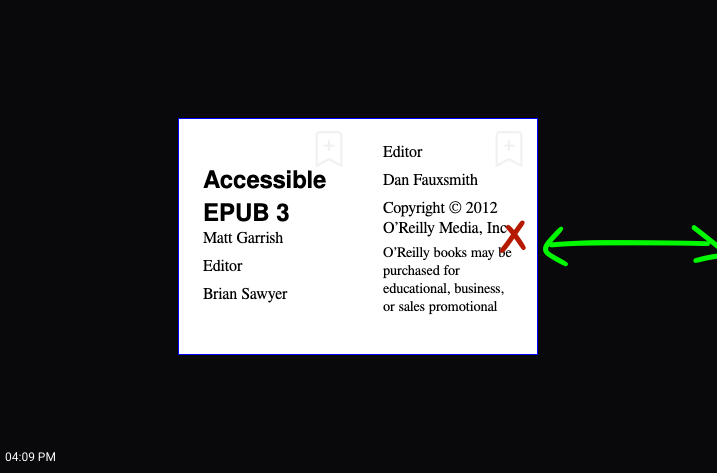
In this situation the user is using the reader in only a certain part of the web page and therefore the gestures should work relative to the reader container.
Patterns recognized
Section titled “Patterns recognized”Navigation
Section titled “Navigation”- Swipe to turn pages
- Pan to turn pages
- Tap to turn pages
Gestures start on a press of the primary button: a left click, a finger or a pen's tip. A right click, which opens the context menu, and a middle click start none: they tap, pan and swipe nothing, turn no page and are not reported on gestures$.
Zooming (in/out)
Section titled “Zooming (in/out)”- Pinch to start zooming
- Pan to move zoom position (When zooming)
Font size change
Section titled “Font size change”- Pinch to start changing font size. This will take priority over zooming for reflowable books and whenever the user does not start pinching on an image.
The API is under the gestures namespace.
type Options = { panNavigation?: "pan" | "swipe" | false fontScalePinchEnabled?: boolean fontScaleMaxScale?: number fontScaleMinScale?: number fontScalePinchThrottleTime?: number pinchCancelPan?: boolean /** * List of selectors that will be tested to ignore gestures. * eg: preventing gestures on a bookmark button. */ ignore?: string[]}.settings
Section titled “.settings”Read or update the enhancer settings.
.hooks
Section titled “.hooks”type PageContext = undefined | { spineItem: SpineItem spineItemPageIndex: number spineItemPagePosition: UnsafeSpineItemPagePosition pageSize: { width: number height: number }}
type Hook = { /** * Use this hook to control whether a gesture should be recognized or not. * eg: You can check whether a gesture is on a bookmark button and cancel it. */ name: "beforeTapGesture" runFn: ( params: { event$: Observable<{ event: GestureEvent; page: PageContext }> } ) => Observable<boolean>}.gestures$
Section titled “.gestures$”Observable<{ type: "tap"; gestureEvent: TapEvent; handled: boolean;} | { type: "pan"; gestureEvent: PanEvent;} | { type: "swipe"; gestureEvent: SwipeEvent;} | { type: "pinch"; gestureEvent: PinchEvent;}>Emits all gesture events that are recognized and processed by the enhancer. It will attach a boolean to let you know whether the gesture has been handled or not. Typically whether an action happened following this gesture (like a passthrough).
Imagine you want to show/hide a menu when the user clicks on the screen. The enhancer will trigger a navigation when the user taps on the left or right edge so you likely don't want to show the menu at the moment. However clicking outside of this range will have no effect. This is where you can intercept the gesture and show your menu.
/** * Here we have a tap event that does not trigger any effects. * We can fallback to trigger the menu. */reader?.gestures.gestures$.pipe( tap((event) => { if (event.type === "tap" && !event.handled) { toggleMenu() } }))Basically if you want to do something based on a gesture and make sure it does not happen with another effect this observable is a good candidate.