Getting Started
Installation
Section titled “Installation”npm install @prose-reader/react-reader @prose-reader/core @prose-reader/shared \ @prose-reader/cbz @prose-reader/enhancer-annotations @prose-reader/enhancer-audio \ @prose-reader/enhancer-gallery @prose-reader/enhancer-gestures \ @prose-reader/enhancer-refit @prose-reader/enhancer-search \ @chakra-ui/react @emotion/react rc-slider react-icons reactjrx rxjs screenfullThis package only uses peerDependencies, all of them required, so don't hesitate to use the library for the rest of your app. react and react-dom (18 or 19) are your app's own.
https://github.com/mbret/reactjrx is specifically very useful if you use rxjs.
import { ReactReader } from "@prose-reader/react-reader"// Don't forget to import the package cssimport "@prose-reader/react-reader/index.css"
const MyAppReader = () => {  const containerRef = useRef<HTMLDivElement | null>(null)  // You own the creation of your reader instance  const readerInstance = useReaderInstance(manifest, containerRef)
  // Then we handle the rendering  return (    <ReactReader      reader={readerInstance}    >      <div ref={containerRef} style={{ height: "100%", width: "100%" }} />    </ReactReader>  )}
A reader lives for a single book, so the idiomatic React pattern is one effect that creates and mounts the reader together, with destroy() as its cleanup. Because destroy() is the true inverse of create + mount, the effect is naturally safe with strict mode re-running effects:
import { useEffect, useState, type RefObject } from "react"import type { Manifest } from "@prose-reader/core"
const useReaderInstance = (  manifest: Manifest | undefined,  containerRef: RefObject<HTMLElement | null>,) => {  const [reader, setReader] = useState<ReturnType<typeof createAppReader>>()
  useEffect(() => {    const containerElement = containerRef.current
    if (!manifest || !containerElement) return
    const instance = createAppReader({ manifest })
    instance.mount(containerElement)    setReader(instance)
    return () => {      instance.destroy()      setReader(undefined)    }  }, [manifest, containerRef])
  return reader}
Settings
Section titled “Settings”The user changes some of the reader's settings from react-reader's menus: the font size, and the spread mode in the Layout dialog. react-reader manages both the same way, as props of the component:
| Setting | Value | Change callback | Scopes | Reader setting |
|---|---|---|---|---|
| Font size | fontSize |
onFontSizeChange |
fontSizeScope, onFontSizeScopeChange, fontSizeValues |
fontScale |
| Spread mode | spreadMode |
onSpreadModeChange |
spreadModeScope, onSpreadModeScopeChange, spreadModeValues |
spreadMode |
react-reader writes the value into the reader, so don't give it to your reader when you create it: it would be overwritten. Keep the value in your app, save it from the change callback and pass it back as a prop:
<ReactReader reader={reader} fontSize={saved.fontSize} onFontSizeChange={(_scope, fontSize) => save({ fontSize })} spreadMode={saved.spreadMode} onSpreadModeChange={(_scope, spreadMode) => save({ spreadMode })}/>The change callback receives the scope whose value the user changed, or "internal" for a value set on the reader directly. Without the value prop, react-reader keeps its own copy for as long as it is mounted, starting from the value the reader was created with. Its menus offer to pick a scope only once you pass the scope props.
Toggling features
Section titled “Toggling features”By default, the reader will use the bare core reader. If you want to unlock more features you can enhance your reader with automatically supported enhancers.
For example adding the enhancer Search will unlock this menu:
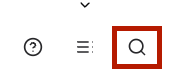
import { searchEnhancer } from "@prose-reader/enhancer-search"import { createReader } from "@prose-reader/core"
export const createAppReader = searchEnhancer(createReader)Search
Section titled “Search”See Search to install enhancer
Bookmarks
Section titled “Bookmarks”See Annotations to install enhancer
- Bookmarking a page is done by tapping the top right corner of the page.
Annotations
Section titled “Annotations”See Annotations to install enhancer
Audio / Audiobooks
Section titled “Audio / Audiobooks”See Audio to install enhancer
Gallery
Section titled “Gallery”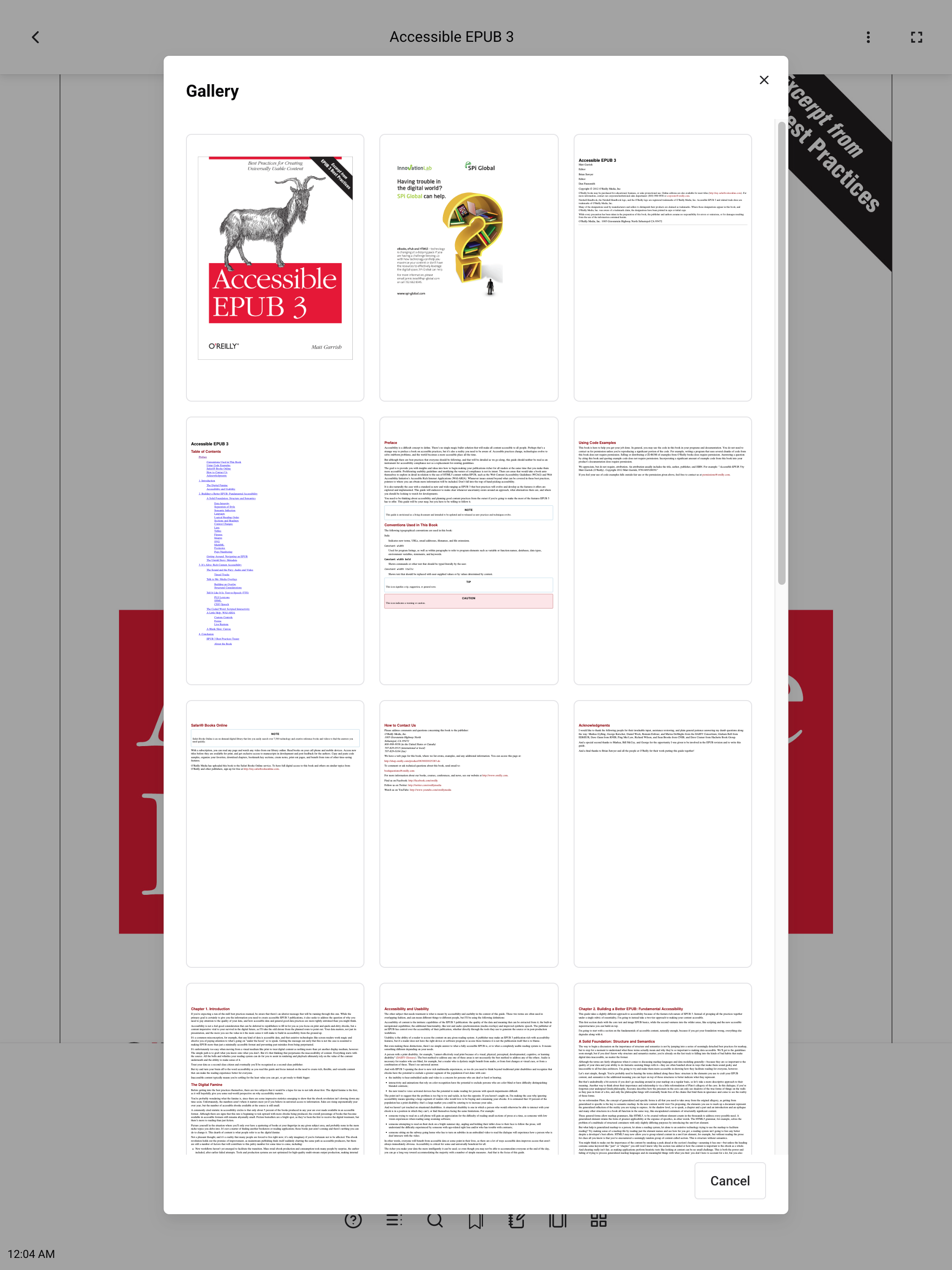
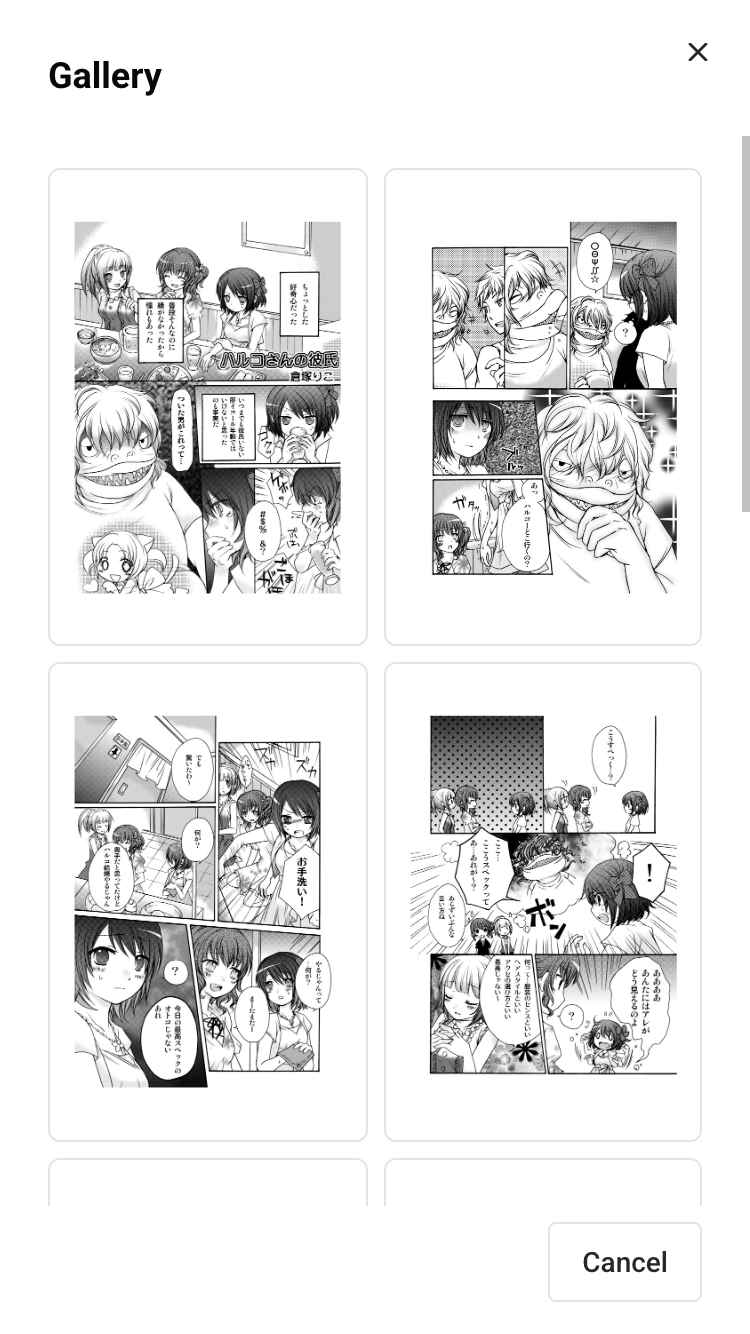
See Gallery to install enhancer
See Refit to install enhancer
CBZ & comics archives
Section titled “CBZ & comics archives”See CBZ & comics archives to install enhancer
- When the current page is half of a split panorama and rotating the device would display the full spread, the reader shows a rotation hint.